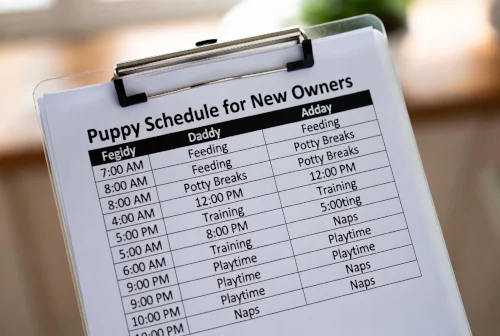
Puppy Schedule for New Owners: Sample Daily Routines by Age
Bringing home a puppy changes every part of the day. Sleep, meals, bathroom breaks, and play all shift around this tiny new family member. A clear schedule helps many puppies feel safe, learn faster, and settle in more easily.
This guide breaks down sample puppy schedules by age, from 8 weeks to 12 months. Each age range includes typical routines, sample timelines, and what daily life often looks like for many new owners. Use these examples as reference points, then adjust timing to match each puppy’s breed, personality, and household.
Puppy Schedule for 8–12 Week Olds
At 8–12 weeks, puppies are like toddlers with fur. They grow fast, sleep a lot, and need frequent bathroom breaks.
Overview of Needs
At this age, many puppies:
- Need to go out every 1–2 hours during the day
- Sleep 18–20 hours in a 24 hour period
- Wake often at night
- Are just starting potty training and crate training
- Benefit from gentle, short social contact and handling
A simple daily visual chart at this stage often shows a repeating pattern of: potty, eat, play for a few minutes, then nap.
Feeding Schedule (4–5 meals)
Small, frequent meals are common for young puppies. A typical 5-meal pattern:
- 7:00 AM breakfast
- 10:00 AM late-morning meal
- 1:00 PM early afternoon meal
- 4:00 PM late afternoon meal
- 7:00 PM early evening meal
Portions usually depend on body weight and food type. An age-by-age feeding guide, like the one from Cainhoy Veterinary Hospital, shows how many calories many puppies need at each stage.
Potty Breaks (about every 1–2 hours)
For many 8–12 week old puppies, a common pattern is:
- First thing on waking
- After every meal
- After each short play session
- After each nap
- Every 1–2 hours while awake
Common signs of needing to go include circling, sniffing in one area, sudden wandering away from play, or heading toward a door or the edge of the room.
Morning Routine
A typical early morning for this age might look like:
- Wake up and go straight outside to potty
- Come back in for breakfast
- Short, gentle play or a few minutes of calm training like name recognition
- Back to a crate or bed for a nap
Midday Activities
Late morning and early afternoon often include:
- Supervised play with light toys
- Soft chew toys that are gentle on baby teeth
- Very short training moments such as “sit” with a single hand signal
- Multiple naps in a quiet, safe spot
Many owners use crates or playpens so puppies can rest without practicing unwanted habits.
Afternoon Schedule
By afternoon, a repeating cycle makes the day predictable:
- Potty break
- Meal
- 5–10 minutes of play or gentle handling
- Short training, like coming when called in the home
- Nap in a crate or quiet area
Evening Wind-Down
Many young puppies settle better at night if evenings are calmer:
- Early evening meal
- Potty break right afterward
- A quiet play or cuddle period in the living area
- Final potty trip just before bedtime
- Lights low, calm voices, then into crate or sleeping spot
Sleep Expectations
At 8–12 weeks, many puppies sleep 18–20 hours a day. A guide from Trupanion on how much puppies sleep notes that long sleep blocks with frequent naps are normal at this age.
Popular nap spots include:
- Covered crates
- Puppy pens with a soft bed
- A dog bed in a corner away from foot traffic
Sample Full-Day Timeline (8–12 Weeks)
- 6:00 AM, wake and potty
- 6:15 AM, breakfast
- 6:30–7:00 AM, gentle play, short training
- 7:00–8:30 AM, nap
- 8:30 AM, potty
- 9:00 AM, snack or meal 2
- 9:15–9:30 AM, play, handling, brief training
- 9:30–11:00 AM, nap
- 11:00 AM, potty, light play
- 12:00 PM, meal 3, then potty
- 12:30–2:00 PM, nap
- 2:00 PM, potty, play
- 3:00 PM, meal 4, then potty
- 3:30–5:00 PM, nap
- 5:00 PM, potty, play or short walk in yard
- 6:30 PM, meal 5, then potty
- 7:00–8:30 PM, quiet family time, gentle play
- 8:30 PM, potty, into crate for the night
- Possible 1–2 nighttime potty trips, depending on the puppy
Puppy Schedule for 12–16 Week Olds
By 3–4 months, many puppies start to look more coordinated and curious. Attention spans stretch a bit, and teething starts for many breeds.
Overview of Changes
Common changes from the 8–12 week stage:
- Slightly longer awake periods between naps
- Starting to chew more as baby teeth loosen
- Some can go a bit longer between potty trips during the day
- Training sessions can last 3–5 minutes instead of just a few seconds
A simple comparison chart for these ages often highlights longer play periods, fewer meals, and slowly improving bladder control.
Feeding Adjustments (about 4 meals)
Many puppies move from 5 meals to 4:
- 7:00 AM breakfast
- 11:00 AM late morning meal
- 3:00 PM mid-afternoon meal
- 7:00 PM evening meal
Resources like Pupford’s puppy feeding schedule by age give example charts that many owners use for planning portion sizes through these early months.
Potty Training Progress
Many 12–16 week old puppies can often hold their bladder 2–3 hours when awake, depending on size and activity. A common daytime pattern is:
- First thing in the morning
- Every 2–3 hours
- Right after each meal
- Right after play
- Right before bed
For reference, the AKC potty training timeline explains typical progress from the first weeks through more reliable house training.
Morning Routine
A typical morning block:
- Potty on waking
- Breakfast
- 10–15 minutes of play or a calm walk around the yard
- Simple command review, such as “sit”, “down”, or “come”
- Nap in a crate or pen for 1–2 hours
Training Sessions
At this age, many puppies handle several short sessions per day, such as:
- 3 minutes on “sit” and “down”
- 3 minutes on name recognition and eye contact
- 3 minutes on “come” indoors on a short lead
High-value treats or favorite toys often help them stay engaged.
Play and Exercise
Common play ideas for 12–16 weeks:
- Short games of fetch on soft surfaces
- Tug with rules such as releasing the toy when asked
- Safe, controlled meetups with calm, vaccinated dogs
- Gentle exploration in different rooms and safe outdoor areas
Nap and Rest Schedule
At 3–4 months, puppies still sleep a lot, often 16–18 hours per day. Many daily routines include:
- Morning nap after breakfast
- Midday nap after lunch
- Late afternoon nap after a play block
- Early evening quiet time before bed
- Overnight sleep with limited or no bathroom trips once bladder control improves
Evening Routine
Evenings often look like:
- Light dinner, not too late at night
- Potty right after the meal
- Puzzle toy or food toy in a crate or bed
- Calm time next to family, low excitement
- Final potty break before lights out
Sample Full-Day Timeline (12–16 Weeks)
- 7:00 AM, wake and potty
- 7:15 AM, breakfast
- 7:30–8:00 AM, play, basic training
- 8:00–10:00 AM, nap
- 10:00 AM, potty and light play
- 11:00 AM, meal 2, then potty
- 11:30 AM–1:30 PM, nap
- 1:30 PM, potty, short walk or indoor play
- 3:00 PM, meal 3, then potty
- 3:30–5:00 PM, supervised play, training, then nap
- 5:00 PM, potty, calm interaction
- 7:00 PM, meal 4, then potty
- 7:30–9:00 PM, family time, light play, chews
- 9:00 PM, last potty
- 9:15–6:30 AM, overnight sleep (with or without a brief potty break depending on the puppy)
Puppy Schedule for 4 Month Olds
Around 4 months, puppies often feel more like active children than fragile babies. Shots are usually farther along, energy jumps up, and teething can be in full swing.
Developmental Milestones
Common changes around 4 months:
- Bigger appetite and more interest in play
- Noticeable growth spurts
- Stronger chewing and mouthing as adult teeth begin to come in
- Longer awake times between naps
Many owners like to keep a simple checklist for this stage, such as vaccine updates, first grooming visits, and progress on basic manners.
Feeding Routine (3–4 meals)
Typical feeding patterns at 4 months:
- Many puppies comfortably move to 3 meals a day
- Some smaller breeds may stay on 4 meals a bit longer
Example 3-meal day:
- 7:00 AM
- 1:00 PM
- 7:00 PM
Fresh water stays available, with some owners picking up water an hour or two before bed to support nighttime dryness.
Potty Schedule
By 4 months, many puppies go out:
- Every 3–4 hours during the day
- Right after meals and play
- Before longer naps and at bedtime
Crate time between breaks often helps puppies learn to hold their bladder a bit longer and rest instead of pacing.
Morning Energizer
Many 4 month old puppies enjoy a slightly more active morning:
- Potty on waking
- Breakfast
- 15–20 minutes of gentle exercise such as walking, sniffing in the yard, or tug games
- Short training set, such as sit, down, and short stays
- Nap to recover from the busy start
Midday Engagement
Common midday blocks include:
- A training game like “find it” with kibble or treats
- Chew time with teething-friendly items
- Light fetch or toy play in a safe area
- A mid-afternoon nap to reset before evening
Afternoon Downtime
Late afternoon often becomes a natural quieter period:
- Potty after waking
- Calm walk or easy indoor play
- Supervised time with family in the main living area
- Rest period or crate time while people work or cook
Socialization Focus
Around 4 months, many owners focus on positive, gentle exposure such as:
- Puppy classes with reward-based methods
- Vet-approved outings to safe public areas
- Soft handling by different trusted people
- New surfaces and sounds at a pace that keeps the puppy relaxed
Evening Prep
As bedtime approaches, many households use the evening for slowing things down:
- Dinner in early evening
- Potty break right after the meal
- Quiet play or grooming
- Gentle cuddle time and a low-key environment
- Final potty trip and then crate or bed for the night
Sleep Guidelines
Many 4 month old puppies sleep around 14–16 hours in 24 hours. A guide from Pumpkin on puppy sleep notes that sleep stays important even as pups approach adolescence.
Sample Full-Day Timeline (4 Months)
- 7:00 AM, wake and potty
- 7:15 AM, breakfast
- 7:30–8:00 AM, play and short walk
- 8:00–10:00 AM, nap
- 10:00 AM, potty, light play or training
- 12:30 PM, potty
- 1:00 PM, lunch, then potty
- 1:30–3:00 PM, nap
- 3:00 PM, potty, play, training
- 5:00 PM, quiet time, supervised chew
- 6:30–7:00 PM, dinner, then potty
- 7:30–9:00 PM, family time, calm games
- 9:00 PM, final potty
- 9:30 PM–6:30 AM, overnight sleep
Puppy Schedule for 5–6 Month Olds
By 5–6 months, many puppies enter a “teen” phase. They may seem more independent and may test rules they seemed to understand earlier.
Growth Phase Overview
Common signs at this age:
- Sudden bursts of energy
- Bigger jumps in height and weight
- Stronger opinions about what they want to do
- More interest in the environment than in people at times
This stage often benefits from clear, predictable daily routines, so puppies know what to expect.
Meal Times (3 meals)
Most puppies at 5–6 months eat 3 meals:
- Morning breakfast
- Midday or early afternoon meal
- Early evening dinner
Resources like Rover’s guide on how often to feed a puppy share example schedules that match many owners’ workdays and school days.
House Training Refinement
For many puppies, daytime potty trips shift to:
- Every 4 hours or so
- After meals
- After rough play and long naps
Nighttime accidents often decrease as bladder capacity grows, provided daytime patterns are consistent.
Morning Routine
A typical 5–6 month morning:
- Potty on waking
- Breakfast
- 20–30 minute walk or active play, adjusted for breed and vet guidance
- Training round focusing on loose-leash walking and recall
- Rest period in a crate or quiet spot
Skill Building
At this age, many puppies work on:
- Loose-leash walking without pulling
- Coming when called, even with mild distractions
- Staying on a mat or bed while family moves around
- Waiting at doors or gates
Short, frequent sessions often fit naturally into the day.
Exercise Recommendations
Healthy 5–6 month old puppies usually need physical and mental activity, often broken into blocks such as:
- A longer morning walk or structured play
- A midday or afternoon active session
- Short games throughout the day, like fetch or hide-and-seek with toys
For detailed feeding to match activity, PetMD’s guide on how much to feed a puppy explains how weight, age, and calories interact.
Rest Periods
Even active “teen” puppies usually benefit from 3–4 naps:
- One after the morning exercise block
- One around midday
- One in late afternoon or early evening
- Overnight sleep of 9–10 hours on average
Evening Activities
Evenings at 5–6 months often include:
- Dinner in early evening
- Potty break
- Enrichment toys like puzzles or snuffle mats
- Calm family time with less roughhousing than earlier in the day
- Final potty trip, then bed
Sample Full-Day Timeline (5–6 Months)
- 7:00 AM, wake and potty
- 7:15 AM, breakfast
- 7:30–8:00 AM, walk or play, simple training
- 8:00–10:00 AM, quiet time or nap
- 10:00 AM, potty and short play
- 12:30 PM, potty
- 1:00 PM, lunch, then potty
- 1:30–3:00 PM, nap or crate time
- 3:00–4:00 PM, walk, training, active play
- 4:00–5:30 PM, rest
- 6:00 PM, dinner, then potty
- 6:30–8:30 PM, family time, light games, chews
- 8:30–9:00 PM, final potty, settle for the night
Puppy Schedule for 6–9 Month Olds
From 6–9 months, many puppies hit a real adolescent stage. They may know cues but choose to ignore them if something else looks more interesting.
Adolescent Stage
Common traits:
- High energy spikes, especially in the evening
- Testing boundaries, like ignoring known rules
- Stronger interest in other dogs or smells outside
- Physical strength that makes pulling and jumping more noticeable
Feeding Schedule (2–3 meals)
Many puppies at this age start to transition to:
- 2 meals a day (morning and evening)
- Some still do well on 3 smaller meals, especially large breeds or very active pups
Potty Reliability
Typical patterns for many 6–9 month puppies:
- Potty every 4–6 hours when awake
- Consistent potty trips after meals and before bed
- Fewer or no nighttime trips, depending on daytime routine and water intake
Morning Start
A common start-of-day pattern:
- Potty on waking
- Breakfast
- Longer walk or structured play session
- Quick review of basic cues like “sit”, “down”, “come”, and “leave it”
Daily Training
Daily training often shifts to:
- 10–15 minute sessions, 1–3 times per day
- Focused practice on polite leash walking and recall
- Work around mild distractions, such as in the yard or a quiet park
Physical Activity
Activity needs stay high, but still balanced to protect growing joints. A typical goal for many breeds:
- 60–90 minutes of combined activity per day, broken into shorter blocks
- Mix of walking, sniffing, training games, indoor play, and light fetch
Nap Structure
Many 6–9 month puppies sleep:
- Around 12–14 hours in a 24 hour period
- With one or two real daytime naps plus shorter dozing times
- Overnight stretches of 8–10 hours, often without bathroom breaks
A guide from Chewy on how much puppies sleep explains how sleep gradually drops as puppies near adulthood.
Evening Routine
Evening routines often keep things calm:
- Dinner at a consistent time
- Potty after eating
- Short walk or training session
- Relaxed play or cuddle time
- Final potty trip, then crate or bed
Sample Full-Day Timeline (6–9 Months)
- 7:00 AM, wake and potty
- 7:15 AM, breakfast
- 7:30–8:15 AM, walk and training
- 8:30–11:30 AM, rest, chew time, light play indoors
- 11:30 AM, potty
- 12:00–2:00 PM, quiet time, nap
- 2:00–3:00 PM, walk, fetch, or games
- 3:00–5:30 PM, rest with short play breaks
- 6:00 PM, dinner, then potty
- 6:30–8:30 PM, family time, enrichment toys
- 8:30–9:00 PM, final potty and bed
Puppy Schedule for 9–12 Month Olds
By 9–12 months, many puppies look like adults, even if they still think like kids. Some breeds reach sexual maturity, and most are close to full height and weight.
Pre-Adult Overview
Common traits in this stage:
- Adult-like body size, especially in small and medium breeds
- More consistent behavior patterns day to day
- Strong bonds with family members
- Longer focus spans when training
Nutrition Plan
Many puppies between 9–12 months:
- Eat 2 meals per day
- Begin transitioning to adult food according to vet guidance and food label instructions
Chewy’s feeding schedule guide outlines common timing for shifting to adult formulas and fewer meals.
Final Potty Habits
House training often looks like this by 9–12 months:
- Scheduled outdoor trips 4–5 times per day
- Reliable signaling when the puppy needs to go out
- Consistent dryness overnight
Morning Routine
A typical routine at this age:
- Potty on waking
- Breakfast
- 30–45 minutes of exercise, such as a brisk walk or active play
- Short review of obedience skills
Advanced Training
Many puppies at this stage work on:
- Off-leash recall in safe, enclosed areas
- Tricks, such as spin, bow, or roll over
- Longer stays with mild distractions
- Polite behavior in public places
Exercise Level
Most healthy young dogs benefit from:
- 90 or more minutes of mixed physical and mental activity per day
- Hikes, walks, and play days balanced with rest times
- Sports or structured games as approved by a veterinarian, especially for large breeds whose joints are still maturing
Sleep Patterns
Sleep often settles around 10–12 hours a day, similar to many adult dogs, with:
- A solid overnight stretch
- One or two shorter daytime rest periods
Evening Wind-Down
Common late-day patterns include:
- Dinner in early evening
- Potty afterward
- Walk or games that are less excited than morning play
- Quiet time with family
- Last trip outside before bed
Sample Full-Day Timeline (9–12 Months)
- 6:30–7:00 AM, wake and potty
- 7:15 AM, breakfast
- 7:30–8:15 AM, walk, run, or active play
- 8:30–12:00 PM, rest, light interaction, training sprinkled in
- 12:00 PM, potty
- 12:15–2:00 PM, rest, chews, relaxed time
- 2:00–3:00 PM, walk, training, or hike
- 3:00–5:30 PM, rest with light play
- 6:00 PM, dinner, then potty
- 6:30–8:30 PM, calm games, cuddles, enrichment
- 8:30–9:30 PM, final potty and bedtime
General Schedule Patterns Across All Ages
Certain patterns show up in almost every age group.
Consistent Rhythms
Most puppies follow a similar rhythm:
- Wake, potty, eat, play, sleep
- Repeat several times a day
- Longer overnight rest broken by fewer potty trips as they age
An age-appropriate training schedule from Purina lays out how feeding, potty breaks, and simple training commonly line up across the first year.
Feeding and Growth
Across the first year, common changes include:
- Moving from 4–5 meals down to 2 meals
- Adjusting portion sizes as growth slows
- Transitioning from puppy food to adult food sometime between 9 and 18 months, depending on breed and vet guidance
Potty Training Path
Many puppies follow a similar path:
- Very frequent breaks and accidents at 8–12 weeks
- Noticeable improvement by 4–6 months with a clear routine
- Mostly or fully house trained by 9–12 months, especially with consistent schedules
Several owners find detailed potty plans, like the Bulldogology puppy potty schedule by age, useful as reference charts.
Informational Table: Sample Puppy Schedule by Age
| Puppy Age | Typical Meals per Day | Daytime Potty Breaks (approx.) | Average Total Sleep | Key Focus of Routine |
|---|---|---|---|---|
| 8–12 weeks | 4–5 | Every 1–2 hours | 18–20 hours | Potty training, short play, socialization |
| 12–16 weeks | 4 | Every 2–3 hours | 16–18 hours | Basic cues, gentle outings, crate comfort |
| 4 months | 3–4 | Every 3–4 hours | 14–16 hours | Longer play periods, teething support |
| 5–6 months | 3 | Every 4 hours | 13–15 hours | Manners, leash skills, structured exercise |
| 6–9 months | 2–3 | Every 4–6 hours | 12–14 hours | Adolescence behavior, impulse control |
| 9–12 months | 2 | 4–5 times daily | 10–12 hours | Pre-adult habits, advanced training |
These ranges are broad and often vary by breed, health status, and lifestyle.
Frequently Asked Questions
Q1: Do all puppies follow the same daily schedule?
No. Breed size, temperament, health, and household routines all influence timing. The patterns in this guide show common examples, not strict rules.
Q2: How long does it usually take before a puppy sleeps through the night?
Many puppies start sleeping longer stretches between 3 and 6 months. Smaller breeds may take a bit longer, and very young puppies often still need nighttime potty trips.
Q3: Is it normal for a young puppy to sleep most of the day?
Yes. Many puppies sleep 16–20 hours a day in the first months. Guides like How Much Do Puppies Sleep? A Guide by Age show that long naps and frequent rest are typical.
Q4: How often do puppies usually need to eat in the first few months?
Many 8–12 week old puppies eat 4–5 small meals daily, then slowly shift to 3 meals, and finally to 2 meals as they approach adulthood.
Q5: What if a puppy’s schedule does not match the examples here?
Puppies often develop routines that match their family’s lifestyle and their own energy level. These timelines serve as reference points that many owners adjust as needed.
Q6: When do most puppies become fully house trained?
Many puppies gain solid reliability somewhere between 6 and 12 months, depending on consistency, supervision, and health. House training tends to be a gradual process, not a single moment.
Q7: Can a puppy have too much exercise in one day?
Yes. Growing joints are sensitive, especially in large breeds. Most experts recommend controlled activity, a mix of mental and physical work, and plenty of rest, rather than long, intense workouts.
Puppy schedules change quickly in the first year. The day often starts with short cycles of potty, eat, play, and nap, then gradually shifts to longer awake times, fewer meals, and more predictable bathroom habits.
These age-based sample routines give a clear picture of what many families experience at each stage. With consistent patterns, regular sleep, and age-appropriate activity, puppies usually grow into confident, well-adjusted young dogs whose days feel calm, predictable, and comfortable.
References
- Age-Appropriate Puppy Training Schedule, Purina
- Puppy Potty Training Timeline and Tips, AKC
- Puppy Potty Training Planner, Level Up Dog Training
- Puppy Potty Training Schedule by Age, Bulldogology
- How Much Should My Puppy Eat? Age-by-Age Feeding Schedule, Cainhoy Veterinary Hospital
- Puppy Feeding Schedule by Age, Pupford
- How Often Should I Feed My Puppy?, Chewy
- How Much To Feed a Puppy, PetMD
- How Much Do Puppies Sleep? A Guide by Age, Trupanion
- How Much Do Puppies Sleep?, Pumpkin