New Dog Owner Checklist: First 30 Days Guide For A Smooth Start
Bringing home a new dog feels exciting and a little overwhelming at the same time. A clear New Dog Owner Checklist for the first 30 days keeps everything simple, from supplies and schedules to health and training.
This guide breaks the first month into daily steps, grouped by weeks. Each day focuses on one theme, so nothing gets missed and life with your new dog starts on the right foot.
Week 1: Days 1–7 – Essential Setup And Bonding
1. Day 1: Prepare Your Home Before Arrival
Day 1 centers on getting the home ready and calm before the dog walks through the door. Many owners find it easier to unpack supplies and set up a safe space before the excitement starts.
Must-have supplies often include:
- Food and water bowls
- Collar with ID tag
- Standard 4–6 foot leash
- Harness, if preferred
- Crate sized for current body length and expected growth
- Bed or soft mat
- A mix of toys (chew, plush, puzzle)
- Training treats
- Poop bags and holder
- Enzymatic cleaner for accidents
Basic puppy-proofing checklist:
- Secure or hide electrical cords
- Move toxic plants and chemicals out of reach
- Pick up small items a dog might swallow
- Use baby gates to block stairs or unsafe rooms
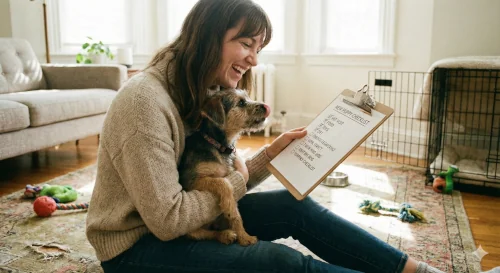
Many vets and trainers suggest creating a simple written plan for who feeds, who walks, and who handles training sessions. A shared plan keeps the whole household consistent from day one.
For a deeper supply list and planning ideas, the PetLab Co. first-time dog owner checklist offers a helpful overview.
2. Day 2: First Night Routine
The first night sets the tone for sleep habits. Many owners place the crate in a quiet corner of the bedroom or nearby hallway so the dog can hear people but still have a calm space.
Soft bedding, a safe chew toy, and something that smells familiar (like a blanket from the breeder or shelter) often help. Nighttime usually includes one or more potty trips, especially for young puppies, since bladders are still small and developing.
If the dog whines, some owners check for real needs first, such as a bathroom break or discomfort, then keep the rest of the interaction neutral and quiet so night stays for sleep, not play.
3. Day 3: Establish A Feeding Schedule
Day 3 often focuses on food and routine. A steady feeding schedule supports potty training, energy levels, and overall health.
Common patterns:
- Puppies: 3–4 meals per day
- Adult dogs: Usually 2 meals per day
Portion sizes depend on age, weight, and food type. Many people follow the feeding chart on the bag, then adjust with vet input if the dog looks too thin or too round. When switching from a previous food, gradual mixing over about a week can help prevent stomach upset.
For more detail on portion sizes and schedules, many owners use guides like the Chewy puppy feeding guide to compare against their vet’s advice.
4. Day 4: Start Potty Training Basics
By Day 4, a pattern usually starts to appear. Many dogs need frequent trips outside, especially:
- First thing in the morning
- After meals
- After play
- After naps
- Before bed
Accidents indoors often improve when a dog is taken outside on a short, simple route, praised calmly for going in the right spot, and brought back inside without a long walk right after. Enzymatic cleaners help break down odors so the dog is less likely to return to the same indoor spot.
Printable tracking charts, like the ones in the Chewy new puppy printables, can help families see patterns and progress over the first month.
5. Day 5: Basic Leash Introduction
On Day 5, many new owners introduce the leash indoors first. Indoors, there are fewer distractions, and the dog can get used to the feeling of something attached to the collar or harness.
Short sessions, a few steps at a time, and calm praise help the dog connect the leash with attention and rewards. Heavy corrections often wait until the dog understands what the leash means, rather than treating the first week like advanced training.
6. Day 6: Health Check At Home
Before the first vet visit, a simple home check gives a baseline. Owners often note:
- Eating and drinking patterns
- Stool quality and frequency
- General energy level
- Any coughing, sneezing, or limping
A quick look at skin, coat, eyes, and ears can uncover early signs of issues. Any known history from the breeder, rescue, or shelter, such as past illnesses or surgeries, can be written down so it is easy to share with the vet later.
7. Day 7: Schedule The First Vet Visit
By the end of the first week, most puppies or newly adopted dogs have their first vet appointment on the calendar. This visit usually covers:
- Full physical exam
- Vaccination plan and timing
- Parasite checks and deworming
- Microchip status
It often helps to bring stool samples and records from the previous caregiver. Many clinics provide their own new puppy handouts, such as this pediatric puppy guide from VCA, which covers basic care, training, and supplies.
Week 2: Days 8–14 – Building Routines
8. Day 8: Begin Focused Crate Training
Once the dog knows where the crate is, Day 8 usually expands crate time. Short sessions with the door open, plus food or toys inside, build a positive link to that space.
Later in the day, the door may be closed for a few minutes at a time while the dog relaxes with a chew. Many owners keep the crate part of the daily rhythm, not just a nighttime bed, so it feels normal and safe.
9. Day 9: Introduce The “Sit” Command
Sit often becomes the first formal cue on many New Dog Owner Checklist plans. It is simple, useful, and easy to practice several times a day.
Common steps include holding a treat above the dog’s head, letting the nose follow up, and letting the rear touch the floor before the treat appears. Over time, the treat moves later in the sequence and the word “sit” comes first.
This cue fits well before meals, before doors open, and before putting on a leash, so the dog starts to link manners to everyday rewards.
10. Day 10: Build A Daily Exercise Routine
By Day 10, many new owners see patterns in energy. Young puppies often cycle through fast bursts of play and long naps. Adult dogs may need longer, steady walks.
Typical elements of a daily routine:
- One or two short walks, matched to age and health
- Indoor games like fetch or gentle tug
- Quiet down time for chews or puzzles
For ideas on balancing walks, crate time, and rest, some people review sample routines such as this puppy schedule for potty, sleep, and crate training.
11. Day 11: Gentle Grooming Introduction
Grooming starts early, not to get the dog “perfect,” but to make handling normal. A simple session might include:
- Light brushing, even if the coat is short
- Touching paws, without trimming yet
- Lifting ears and looking inside
- Briefly opening the mouth to peek at teeth
Short, calm sessions build trust and make later nail trims and baths less stressful. Many groomers and vets appreciate dogs that already accept gentle handling.
12. Day 12: Start Flea, Tick, And Heartworm Prevention
At or around the first vet visit, a plan for monthly preventives is usually set. On Day 12, owners often start the first dose or schedule the first application.
Most plans include:
- A product for fleas and ticks
- A heartworm preventive, often monthly
- Possibly a broad dewormer, based on local risks
Detailed parasite prevention programs vary by region, so many people refer to their vet’s advice along with checklists like the Banfield new puppy checklist.
13. Day 13: Socialization With Family And Household
Socialization starts at home. On Day 13, the focus often shifts to calm, predictable contact with the people who live in or visit the house.
Common household guidelines:
- Let the dog approach people, not the other way around
- Teach kids to pet on the side of the body, not grab at the face
- Keep noise and sudden movements lower around mealtimes and naps
Other resident pets usually meet through gates, leashes, or crate doors at first, with more freedom added only when everyone seems relaxed.
14. Day 14: Review Week 1 Progress
At the end of Week 2, many owners look back at the first days and adjust. Simple notes might cover:
- Potty accident trends
- Crate comfort and sleep stretches
- Reaction to basic handling and new sounds
Some people also weigh their puppy at home or at the vet to track growth. Larger breed puppies can change weight quickly, which affects food portions and harness sizes.
Week 3: Days 15–21 – Training And Socialization
15. Day 15: Add The “Stay” Command
With “sit” in place, “stay” often comes next. Early sessions usually happen in low-distraction rooms.
Owners often:
- Ask for a sit
- Add a hand signal and the word “stay”
- Take one small step back, then return and reward
The distance and time grow slowly, so the dog has many chances to succeed. Calm pauses become part of the daily routine, which helps in busy doorways or before crossing streets.
16. Day 16: Short Neighborhood Walks
By Day 16, routines at home feel more familiar, so many owners move to short neighborhood walks. These walks are less about distance and more about exposure to life outside.
Typical sights and sounds might include:
- Cars and bikes passing
- Mailboxes, trash cans, and new textures underfoot
- Friendly people at a distance
The goal for this stage is usually calm exposure, rather than strict obedience. If the dog seems nervous, distance and time outside can match their comfort level.
17. Day 17: Playdate With A Known Dog (If Appropriate)
If the dog is fully cleared by a vet and vaccinations are on track, some families arrange a playdate with a healthy, dog-friendly dog in a safe space.
Early playdates often work best:
- On neutral ground, like a yard that is new to both dogs
- With leashes held loosely at the start
- With breaks if play gets too wild or one dog looks stressed
Watching body language (loose movements, play bows, relaxed tails) helps people decide when to pause or end the session.
18. Day 18: Start Dental Care Habits
Healthy teeth start early. Day 18 works well for a short, calm introduction to dental care.
Common steps:
- Let the dog lick dog-safe toothpaste from a finger
- Gently rub along the gum line for a few seconds
- Gradually add a toothbrush or finger brush on later days
Vets often remind owners that good oral care supports overall health. Articles such as the ASPCA general dog care guide highlight dental care as part of basic routine health.
19. Day 19: Practice Short Alone Time
By now, many dogs already rest in the crate while people are home. Day 19 focuses on calm time alone while people leave the house briefly.
Owners often:
- Provide a safe chew or puzzle toy
- Step out for a few minutes, then return calmly
- Slowly increase the length of these outings
Regular, low-key absences help many dogs accept alone time as normal and predictable rather than stressful.
20. Day 20: Nutrition Check And Food Review
Around the third week, a quick review of food and body condition helps keep growth on track. People often look for:
- Visible waist when viewed from above
- Ribs easy to feel with light pressure, but not sticking out
- Bright eyes and a healthy coat
If there are concerns about weight gain or loss, many owners bring notes or photos to their vet or compare with guidance like how much to feed a puppy on PetMD when preparing questions.
21. Day 21: Second Vet Follow-Up Or Vaccine Visit
If the vet set a vaccine schedule that includes a three-week booster, Day 21 may be a follow-up visit. This appointment often includes:
- Booster vaccinations
- Weight check and body condition check
- Review of behavior, potty training, and socialization
Some clinics also discuss microchipping, spay or neuter timing, and ongoing parasite prevention at this stage. For a detailed look at what to expect from a first or follow-up visit, guides like the Steinway Court Vet puppy visit checklist outline common steps.
Week 4: Days 22–30 – Health Maintenance And Next Steps
22. Day 22: Introduce “Come” (Recall)
Recall often becomes the safety cue that every New Dog Owner Checklist includes. Day 22 focuses on early recall work in safe, enclosed spaces.
Common steps:
- Use a long line in a fenced yard or open room
- Call the dog’s name once, then the cue, for example, “Bailey, come”
- Reward with high-value treats or a favorite toy
Frequent, upbeat repetitions build a habit of running toward the person calling, not away.
23. Day 23: Group Socialization With People And Sounds
Around Day 23, the dog may feel ready for more variety, such as:
- Short car rides
- Visitors coming to the home
- Background sounds like vacuum cleaners or doorbells
The goal stays the same: calm, brief, and positive experiences. Dogs benefit from a wide range of safe exposures during their early months, not just meeting many other dogs.
24. Day 24: Nail Trim Routine
Paw handling began earlier; now actual trims can start. Some owners use clippers, others prefer grinders. Either way, early sessions usually stay very short.
Many people:
- Trim only one or two nails at a time
- Pair handling with small treats
- Stop before the dog gets restless
If nails feel too tricky or the quicks are hard to see, many families ask a groomer or vet tech to handle the first few trims while they watch.
25. Day 25: Emergency Preparedness
By Day 25, daily life feels more settled, which makes it easier to think about “just in case” plans.
Common items in a basic pet first-aid kit:
- Non-stick bandages and gauze
- Tape and small scissors
- Styptic powder for minor nail bleeds
- Digital thermometer and lubricant
- Saline for eye rinsing
Many owners also keep the name, address, and phone number of a nearby emergency vet handy on the fridge or in their phone.
26. Day 26: Bathing Introduction
Not every dog needs a bath in the first month, but Day 26 works well for an introduction, even if it is just a rinse or a “practice” bath.
Key parts of a low-stress bath:
- Lukewarm water, not too hot or too cold
- Dog-safe shampoo
- Gentle towel drying, and blow dryer only if the dog accepts it
Future grooming visits go smoother when dogs already see tubs and water as normal.
27. Day 27: Research Training Classes
By the end of the first month, many new dog owners start to look for group classes or structured training help. Puppy kindergarten or basic manners classes can provide:
- A safe space for controlled socialization
- Coaching on leash skills and household rules
- Practice working around distractions
Online options also exist if in-person classes are not available locally. Blogs such as this crate training and schedule guide from Keen Dog Training show how structured training habits fit into daily life.
28. Day 28: Spay/Neuter Timing Discussion
If not already covered at the vet, Day 28 often includes research on spay or neuter plans. Timing depends on:
- Breed and expected adult size
- Health history
- Behavior patterns
- Local regulations or rescue agreements
Many vets share written guidelines and talk through pros and cons for the specific dog, rather than following a one-size-fits-all timeline.
29. Day 29: Full Routine Assessment
On Day 29, many families step back and look at the big picture. A sample review might cover:
- Feeding times and portion sizes
- Walks, exercise, and play
- Crate time and sleep schedule
- Training cues learned so far
Any patterns that feel stressful or unbalanced can be adjusted for the next month. Simple notes in a journal or on a calendar help track changes over time.
30. Day 30: Ongoing Care Plan
By Day 30, the dog is no longer brand new, and the next phase begins. Many owners sketch out a 3–6 month plan that includes:
- Monthly parasite preventives
- Future vaccine appointments
- Grooming schedule
- Training goals, such as new cues or sports
Resources like this PetMD new puppy checklist and the Levittown Animal Hospital first 30 days guide can provide extra structure when building long-term routines.
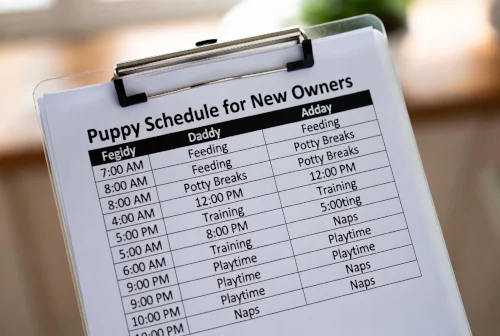
Sample First-Week Daily Schedule (Informational Table)
Below is a simple example of a daily rhythm many new owners use for young puppies in the first week. Times and details adjust to each dog, but the pattern of “potty, activity, rest” repeats through the day.
| Time | Activity Type | Example Actions |
|---|---|---|
| 6:30 a.m. | Wake and potty | Outside to potty, brief calm praise |
| 6:45 a.m. | Breakfast | Measured meal, fresh water |
| 7:00 a.m. | Short play | Light tug, toys, a few “sit” reps |
| 7:20 a.m. | Potty break | Outside again, same spot if possible |
| 7:30–9:00 a.m. | Crate rest / nap | Quiet crate time with a chew toy |
| 9:00 a.m. | Potty break | Outside, short walk around yard or block |
| 9:15 a.m. | Training mini-session | 5 minutes of “sit” or name recognition |
| 9:30–11:30 a.m. | Supervised free time | In one room, toys available |
| 11:30 a.m. | Potty break | Outside before lunch |
| 11:45 a.m. | Lunch | Second meal for young puppies |
| 12:00–2:00 p.m. | Nap / crate rest | Quiet time away from heavy activity |
| 2:00 p.m. | Potty and short walk | Outside, then gentle leash walking indoors |
| 2:30–4:30 p.m. | Play and family time | Simple games, handling, calm socialization |
| 4:30 p.m. | Potty break | Outside, consistent routine |
| 5:00 p.m. | Dinner | Final meal if using three meals per day |
| 5:30–7:30 p.m. | Light play and training | Short sessions, chew time, supervised freedom |
| 7:30 p.m. | Potty break | Outside before winding down |
| 8:00–9:30 p.m. | Calm evening time | Quiet toys, cuddles, grooming practice |
| 9:30 p.m. | Final potty | Outside, then into crate for night |
This structure can be scaled up or down for older dogs by adjusting meal counts, walk length, and crate time.
Frequently Asked Questions
How long does it usually take a new dog to settle in?
Many dogs start to relax after about three days, learn the basics of the household over three weeks, and feel fully at home after about three months. The first 30 days are the foundation, not the finish line.
How often do most puppies go to the vet in the first month?
Many puppies see a vet at least once for an intake exam and vaccines. Some need a second visit within the first month for boosters, parasite checks, or follow-up exams.
Is crate training part of every New Dog Owner Checklist?
Crate training appears on many checklists because it provides a safe resting spot and supports potty training and travel. Some families choose other setups, such as exercise pens, if crates do not fit their space or personal style.
When do puppies usually sleep through the night?
Some puppies sleep through the night within a couple of weeks, while others need nighttime potty breaks for several months. Age, size, and bladder capacity all play a role.
Does this 30-day plan apply to adult rescue dogs too?
The structure often works for adult dogs, with fewer meals, longer walks, and slower introductions if there is a history of stress or trauma. Adult dogs may pick up training cues faster, but they still benefit from steady routines and gentle socialization.
A clear New Dog Owner Checklist for the first 30 days turns a busy, emotional month into a simple step-by-step plan. The daily structure in this guide covers supplies, health care, training, socialization, and long-term planning, one small piece at a time.
Each dog moves at a slightly different pace, but a steady routine, gentle structure, and thoughtful preparation help most new dogs settle in and grow into confident, well-adjusted companions.
References
- First 30 Days with Your Puppy: Essential Checklist for New Owners – Levittown Animal Hospital
- New Puppy Checklist: Essentials for Your New Dog – PetMD
- New Puppy Printables: Checklists and Training Trackers – Chewy
- Your New Puppy Checklist – Banfield Pet Hospital
- Puppy Schedule: Potty, Sleep, Feeding & Crate Training – PuppyBee
- Puppy Feeding Guide: How Much to Feed a Puppy – Chewy
- How Much To Feed a Puppy – PetMD
- General Dog Care – ASPCA
- Puppy’s First Vet Visit: Checklist & What to Expect – Steinway Court Vet
- New Puppy Guide: Vet Care, Training & Supplies – VCA Hospitals
- Crate Training 101: Daily Schedules – Keen Dog Training
- First-Time Dog Owner Checklist – PetLab Co.