First 48 Hours With Your New Dog: A Simple Survival Guide For A Calm Start
Bringing a new dog home feels exciting, messy, and a little chaotic all at once. Those first 48 hours often set the tone for potty habits, sleep patterns, and how safe your dog feels in your home.
This guide walks through the first two days in a simple, hour-by-hour style. It focuses on calm structure, clear routines, and realistic expectations, based on common practices many trainers and veterinarians describe, such as the ones shared in resources like the AKC’s first-day puppy guide.
Use it as a reference, not a rule book. Every dog has its own pace and personality.
Hour 0–1: Calm Arrival And First Safe Room
The first few minutes inside the home often feel huge to a new dog. New smells, flooring, sounds, and people all hit at once. A quiet, steady arrival usually helps the dog process everything with less stress.
Many new owners choose to bring the dog straight into a single “safe room” such as a laundry room, kitchen, or small office. This room typically:
- Has a door or baby gate
- Uses easy-to-clean floors
- Keeps the dog away from stairs and clutter
Common do’s and don’ts for this moment often look like:
Do:
- Speak in soft, normal tones
- Move slowly, without crowding the dog
- Keep greetings short and relaxed
- Let the dog sniff the room at their own pace
Don’t:
- Shout or squeal
- Pass the dog around from person to person
- Lean over or hug tightly
- Let kids rush or grab at the dog
Many people remove the leash only once the door to the safe room is closed and secure. Before the dog explores more of the house, a quick home scan usually happens.
A simple safety checklist might include:
- Put away small chewable items on the floor.
- Secure loose cords and chargers.
- Move trash cans behind a door or into a cabinet.
- Block off stairs and open balconies.
- Store cleaning products and medicines out of reach.
Resources like 3 Lost Dogs’ first-week guide often describe this stage as “management first, freedom later,” which matches what many trainers see in successful homes.
Potty Break #1: Within 15–30 Minutes
Many dogs need to go out shortly after arriving. New stress, movement, and earlier meals can all trigger the first potty trip.
A common pattern looks like this:
- The dog stays on a leash.
- The owner takes them to a pre-chosen potty area outside.
- The spot is fairly quiet and away from busy sidewalks when possible.
Many people use one simple phrase, such as “Go potty,” and repeat it gently while standing still. Movement often distracts puppies, so staying in place and letting them sniff works better for many dogs.
When the dog finishes, owners usually respond with a clear marker and reward, such as:
- Happy, upbeat praise
- A small, high-value treat
- A short moment of calm affection
House-training routines like the AKC’s potty training timeline often build around this early pattern: same spot, same words, same reward.
Water, Food Timing, And First Feeding
Once the dog is back inside, fresh water becomes the next basic need. Many owners place a non-tip stainless steel bowl in the safe room. Stainless steel tends to clean easily and does not hold odors as much as plastic.
During the first hour or two, some dogs gulp water. Others sip slowly. Many people casually watch for signs of over-drinking, such as:
- Rapid gulping
- Coughing or gagging
- Vomiting soon after drinking
Feeding depends on when the dog last ate. Shelters, rescues, or breeders usually share feeding times and food type. Many homes choose to:
- Delay a meal if the dog ate within the last few hours
- Offer a light first meal later, once the dog has settled
- Use the same brand and formula the dog already knows
Routines like the meal plans discussed in PuppyBee’s schedule guide often start simple: small, measured portions, always at roughly the same times each day.
Reading Early Body Language
New dogs often send clear signals about how they feel. Common signs of stress or uncertainty can include:
- Panting that does not match room temperature or activity
- Pacing or restlessly circling
- A tucked tail or lowered body
- Frequent yawning or lip licking
- Avoiding eye contact or turning the head away
Many dogs relax when allowed to sniff and explore the safe room without pressure. People often sit sideways or at a slight angle instead of facing the dog head-on. This softer posture can look less intense to a nervous dog.
Information from veterinary behavior sources like VeterinaryPartner’s overview for first-time puppy owners often highlights these early signals as normal and temporary.
Crate Introduction In Hour 1
During the first hour or two, many people set up a crate in the safe room. The crate usually includes:
- Soft but washable bedding
- A safe chew toy
- A light cover over part of the top to create a den-like feel
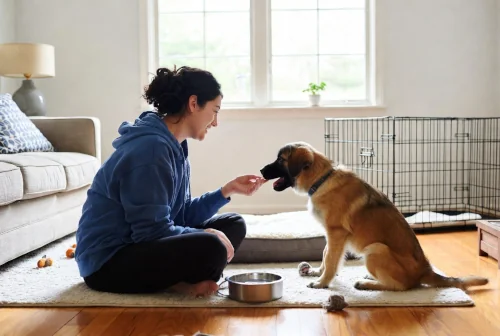
Instead of placing the dog directly inside and closing the door, some owners choose a slower approach. For example:
- Place treats or a stuffed chew just inside the crate door.
- Let the dog step in and out freely.
- Gradually toss treats deeper inside over several short visits.
This kind of calm, low-pressure start often matches the methods outlined in crate training guides such as Purina’s crate-training article.
Family Introductions: One Person At A Time
Once the dog has had a drink, a potty break, and a few minutes to breathe, many homes begin family introductions.
A common structure looks like:
- One person enters the safe room at a time.
- Adults sit or kneel sideways, keeping movements easy and slow.
- Children sit on the floor and wait for the dog to come to them.
Hands usually stay low and relaxed. Many families avoid:
- Reaching over the dog’s head
- Hugging or grabbing
- Staring straight into the dog’s eyes
If the household already has dogs, some owners choose to keep introductions for a later time or do them outdoors on neutral ground with leashes, one by one. Articles such as the Trupanion guide to the first 48 hours with a puppy often describe this slow, structured style.
First Evening: Hours 1–6 Of Quiet Routine
The first afternoon or evening often sets the rhythm for the rest of the day. Many homes keep this time low-key with a simple loop:
- Short potty breaks
- Gentle indoor time
- Brief, calm play
- Crate or pen naps
Lights and noise usually stay soft. Loud TV, vacuuming, or big gatherings often wait for later days.
This early evening window also gives the dog time to learn that the crate or pen is a safe place to rest. Some owners stay close by, read, or work on a laptop near the crate while the dog naps. Quiet presence often helps many dogs settle.
First Night: Potty Schedule, Sleep, And Whining
Night 1 can feel long. Puppies in particular often wake up more than once.
A common structure for that first night might include:
- A final potty trip right before bed
- A crate near the owner’s bed or at least in the same room
- An alarm for a middle-of-the-night potty trip, especially for young puppies
Many people carry small puppies to the potty area, then carry them straight back to the crate after they finish. The goal is simple: bathroom, then back to sleep, with little talking or play.
Whining at night can have many causes. Some dogs call out because they need to go out. Others protest a new routine or feel alone. Owners often:
- Listen for urgent, intense cries that may signal real need
- Keep nighttime potty trips boring and quiet
- Let short, attention-seeking whines fade if the dog has already pottied and seems comfortable
Sleep routines like those discussed in Embrace Pet Insurance’s first 48-hour guide often improve after the first two or three nights, once patterns feel predictable to the dog.
Morning Of Day 2: Potty, Breakfast, And Simple Structure
Morning of Day 2 usually starts with a direct trip outside. Many owners open the crate, clip on the leash, and head straight to the same potty spot as the previous day. Using the same area and phrase helps many dogs connect the routine faster.
After the morning potty break, breakfast often happens in a calm, consistent way, such as:
- Food served in the crate or in the safe room
- A measured portion based on label guidance or vet input
- A set time limit, often 10–15 minutes, before the bowl is removed
Feeding patterns often tie into schedules like the ones in MedVet’s puppy care guide. Puppies usually eat more often than adult dogs, so homes often divide meals accordingly.
Within 15–30 minutes after eating, many puppies need another potty trip. Owners often watch for early signs such as:
- Circling
- Sniffing one spot with intensity
- Heading toward a corner or door
Each successful trip outside builds the early house-training record.
Short Play, Grooming Check, And Leashed House Tours
Late morning or early afternoon on Day 2 often becomes a “get to know each other” window. Many families add:
- Short, gentle play sessions with soft toys
- Early name recognition games, such as saying the dog’s name once and rewarding eye contact
- Quick grooming checks of ears, paws, teeth, and coat
These experiences often stay short and positive. The goal is simple exposure, not deep grooming sessions.
Some owners also start leashed house tours. The dog, still on leash, visits one new room at a time. Calm behavior gets quiet praise or a treat. Wild zoomies or chewing on furniture gently ends the tour as the dog returns to the safe room or crate to rest.
Guides such as the Moonlight Veterinary “New Puppy Parents” article often frame this as early social learning inside the house.
Midday Of Day 2: Meals, Potty “Marathon,” And Nap Practice
By the middle of Day 2, many dogs start to show natural patterns. Puppies, in particular, often need frequent trips outside. Some typical intervals:
- Very young puppies: every 1–2 hours while awake
- Slightly older puppies: every 2–3 hours
- Adult dogs with prior house-training: often every 3–4 hours
Owners often track timing, spots, and outcomes in a simple log. The pattern might include:
- Time of day
- After which event (meal, nap, play)
- Indoor or outdoor success
- Any accidents
This early “potty marathon” sets the base for later schedules like the ones discussed on LA School for Dogs’ first 30 days potty and crate training article.
Nap practice also matters. Many homes put the dog in the crate or pen for each mid-day nap, with the household a little quieter during that time. The dog starts to learn that crate time often means sleep and calm, not punishment.
Handling Accidents And Cleaning Up
Accidents in the first 48 hours are very common. Even adult dogs with past house-training often slip in a new place.
When this happens, owners typically:
- Interrupt gently if they notice it mid-stream, then guide the dog outside
- Clean the spot with an enzymatic cleaner that breaks down odor
- Avoid loud scolding or rubbing noses in messes
Keeping a simple record of accidents helps many owners see trends. For example:
| Time of Day | Location | Just After What? | Notes |
|---|---|---|---|
| 9:30 a.m. | Living room | 10 min after breakfast | First accident |
| 1:15 p.m. | Hallway | After play session | Missed potty break |
| 7:45 p.m. | Kitchen | Before dinner | Signal unclear |
Patterns like “always after play” or “right before dinner” often stand out, which makes the next 48 hours smoother.
Late Day 2: Walks, Social Sounds, And Evening Routine
If the dog has had basic vaccines and the vet or shelter has cleared light outdoor time, some homes begin very short walks on Day 2. These usually look like:
- Quiet residential street or yard
- Soft, well-fitted harness or collar
- Just 5–10 minutes at an easy pace
Owners often skip dog parks and crowded areas during these early outings. The focus stays on gentle exposure to sights and sounds.
Inside, many families start light sound socialization, such as:
- Briefly turning on the vacuum in another room
- Running the dishwasher or washing machine
- Playing soft music or TV at a normal volume
The evening of Day 2 often follows a steady loop:
- Potty break
- Short, calm play or cuddle time
- Final meal of the day (if on a three-meal schedule)
- Quiet crate wind-down
- Last potty trip before bed
Routine-focused resources like the AKC article on puppy schedules and routines often describe this simple order as the backbone for the next weeks.
Vet Check-In, Supplies Review, And Progress Notes
Some families schedule an in-person vet visit within the first 48 hours. Others at least call the clinic to:
- Confirm vaccine history
- Discuss parasite prevention plans
- Ask about food amounts, sleep, and normal stool changes
Guides like the Levittown Animal Hospital first 30-day checklist often treat this early contact as a baseline for long-term care.
By the end of Day 2, many owners also review supplies, such as:
- Food and treats
- Waste bags and enzymatic cleaner
- Chew toys
- Training treats and storage containers
A quick restock list usually keeps future days calmer.
Some people also start a short journal. Daily notes might include:
- How many successful outdoor potty trips
- How many accidents
- Sleep length and wake-ups
- Appetite and water intake
- New things the dog handled well
Over time, this log shows progress that can be hard to notice day to day.
Bonding Moments In Hour 48
Around the 48-hour mark, many dogs begin to show early signs of trust. Small bonding rituals often grow from there, such as:
- Brief hand-feeding of part of a meal
- Calm eye-contact games with tiny treats
- Gentle petting in favorite spots the dog now offers
These simple, repeatable actions support relationship-building and help the dog link people with safety and predictability. Articles such as 24Petwatch’s first 48-hour overview highlight this early bond as a key part of the long-term picture.
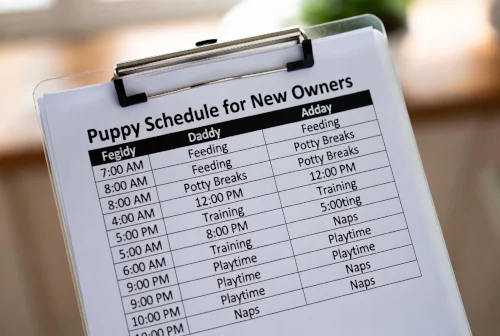
Sample First 48-Hour Rhythm
This table outlines a common pattern many new dog owners follow. Timings change by age, breed, and schedule, but the structure usually stays similar.
| Time Window | Typical Focus |
|---|---|
| Arrival, Hour 0–1 | Safe room, first potty, water, crate setup |
| Hours 1–3 | Calm exploration, body language watching, first nap |
| Hours 3–6 | Potty break, light play, family introductions |
| Evening, Hours 6–10 | Short potty cycles, crate rest, quiet household |
| Night, Hours 10–12 | Final potty, crate near bed, planned night potty |
| Morning, Hours 12–18 | Morning potty, first full meal, post-meal potty |
| Midday, Hours 18–30 | Walks if appropriate, naps, frequent potty breaks |
| Late Day 2, 30–42 | Short crate sessions, indoor leash tours, gentle play |
| Evening, 42–48 | Solidified night routine, bonding, progress review |
Frequently Asked Questions
How long do most puppies sleep in the first 48 hours?
Many puppies sleep most of the day, often 16–20 hours in total. Short bursts of play and exploring usually sit between naps.
How often do puppies usually need to go out during these first two days?
Very young puppies often need a potty trip every 1–2 hours while awake, plus after meals, after naps, after play, and right before bed.
Do adult rescue dogs also need a strict routine?
Most adult dogs benefit from structure in a new home. Clear potty times, regular meals, and a consistent safe space often help them relax and adjust, even if they were previously house-trained.
When do many people start basic training?
Many owners start simple skills such as name recognition, hand targeting, and “sit” during Day 2, using very short, fun sessions and small treats.
What if the puppy does not eat much in the first day?
Some puppies eat lightly when stressed by a big change. Owners often monitor closely for energy level, water intake, and bathroom habits, and then contact a veterinarian if appetite stays low or other signs appear.
Those first 48 hours with a new dog often feel like a blur of potty trips, crate doors, and “Are we doing this right?” moments. Underneath the chaos, a simple pattern usually appears: safe space, predictable routine, gentle contact, and plenty of rest.
The details differ for each dog, but the core stays the same. Clear structure, calm handling, and consistent patterns in these early days often create a strong base for everything that comes next.
References
- Your First Day at Home With a New Puppy: Tips for Day One, American Kennel Club
- Puppy Potty Training Timeline and Tips, American Kennel Club
- Puppy Training: How to Crate-Train a Puppy, Purina
- The First 48 Hours With a New Puppy, Trupanion
- The First 48 Hours With Your Puppy, My Loyal Hound
- What to Do With a New Puppy: First Week, 3 Lost Dogs
- What First Time Puppy Owners Should Know, VeterinaryPartner